FOCUS: How to work concentrated on what is important
The most productive people do not work long hours; they work with intense concentration on their most important tasks. This workshop will teach you how to improve your focus and sharpen your concentration to be more productive and experience flow in your endeavours.
Content:
Success in academia is not so much a question of talent as of focus and perseverance. As a scientist, you need concentration to read and write articles, conduct studies, analyse data, or make decisions that will significantly impact your career. But this mountain of work and the countless sources of distraction offered by electronic devices make it difficult to focus on a particular task or project.
This workshop will help you improve your focus and sharpen your concentration skills. To this end, we will identify what prevents you from working concentrated, your vision, and how to make it happen by working with an intense focus on the right tasks. You will learn simple methods to increase your concentration (e.g., batch work, the Pomodoro technique, mindfulness training) and experience flow.
Goals:
- Learn what concentration and focus are and why they are essential to productive work
- Identify what prevents you from working concentrated
- Develop your vision and identify your priorities
- Create a plan of action
- Learn how to overcome procrastination and deal with distractions
- Learn how to increase your concentration skills
Workshop-Leitung
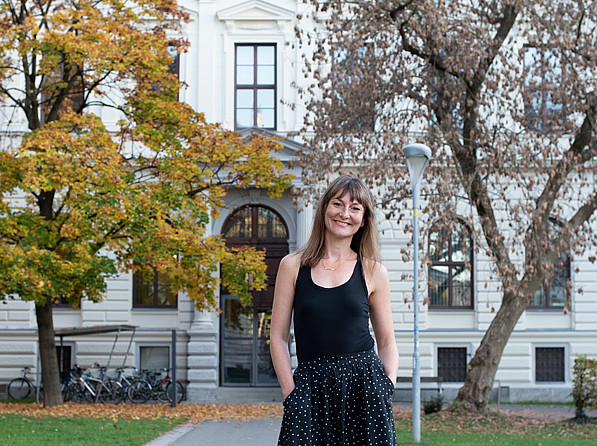
Dr. Gayannée Kedia is a researcher in psychology and neuroscience at the Karl-Franzens University of Graz, Austria. She owns degrees in biology and psychology and has worked for several universities in France, the UK, Germany, and Austria. Parallel to her academic activity, she works as a writing coach and scientific trainer. She is also the founder of abrilliantmind.blog, a blog aimed at helping scientists be more productive and happier at work.
Anmeldung und weitere Informationen
Bitte geben Sie uns bei der Anmeldung folgende Informationen bekannt: Akademische(r) Grad(e), Fachbereich der (angestrebten) Habilitation, (Arbeits-)Titel des Habilitationsprojekts, Institution & Institut.